
“Hey. I need some money. I’m leaving,” he said in his I’m-entitled-demanding way. My first reaction wasn’t going to land me in the parenting hall of fame. Later I was reminded of another father, the one in the Parable of the Prodigal and his Brother [Luke 15:11-31]. But that was later.
My son and I had a rather strained relationship since the divorce; he had trouble adjusting to his new situation – especially troubling since the time of his mother’s phone call. “You take him! I can’t handle him!” So after being relocated too often by both the military and the Church, here he was being shipped off once again to another home.
I never intended to be a single father, but now filed away in that category by every poll and survey, I took on all it meant. Children do not have the experience to deal with crises and distress, often acting out their emotions. They need to be guided through all those subtleties of emotions. Some are more readily guided than others. Between the considerable acing out of the cliched always-in-trouble PK, we did try to find shared interests – rock climbing, music, and paintball among them. I encouraged his interest in sports – soccer, hockey, and swimming his choices. And as time passed, I made the house a safe place for he and his friends to gather, study, talk, and play. But home life was still difficult. Whatever I did, he would always comment on what was lacking. The rebellion of teenage years was maddening (at least for me).
Then the day came for his great announcement. “Hey. I need some money. I’m leaving,” [Father, give me the share of the property that will belong to me.] “I’m going to Brazil to play soccer.” My son had left his first semester of college behind for open soccer tryouts; and now was off to Brazil to play. No Portuguese language background; no world traveler he; just the exuberance of youthful adventure […he gathered all he had and traveled to a distant country.].
Perhaps no Scripture text has logged more pulpit time than the Parable of the Prodigal and his Brother. It is a storehouse of sin and redemption, of grace and the refusal of grace, of loss and return. And I never knew its full impact until it became personal.
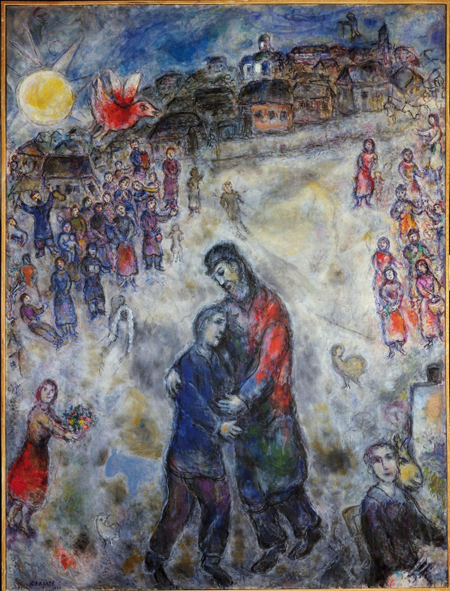
Countless repetitions transform a parable with mysterious twists and turns and unexpected depths into an anecdote, into little more than a moral tag line. “Look, no matter how royally you’ve messed up your life, just pick yourself up. Forgiveness is waiting; you get a do-over right where you left off.”
The story told that way becomes another predictable piece of self-help advice. Once the younger son gets himself together and heads home, the father is obligated to throw a party as his due for such a dramatic turnaround.
Told that way, it’s just not the shocking, surprising parable Jesus first spoke. It’s not the radical, shocking, life-altering assertion: Repentance is a response to God’s grace, not a prerequisite for it. Grace always comes first.
I don’t know if his time away constituted “squandering his life in dissolute living.” I do know my son was living a resort lifestyle, even to dating a Brazilian model. He returned, crossing the country trying out for various soccer teams in the U.S. Then moved back home to await for word from them. He waited…and waited. And soon he moved out to room with friends from high school and take local college classes while he waited.
One day he called to invite me out to pay for dinner. It was the first time we sat down together for a prolonged time since his return. He was older now since the last time we ate at that restaurant. I started by ordering a bottle of wine for the two of us – and laughed at his mild surprise.
Conversation between us was rather stilted at first. In passing, I mentioned seeing one of his friends before she moved east, and he then began telling anecdotes about her. Which then led to rounds of “remember when…?”
He started with another: “Remember when I came home from Jim’s party…” He suddenly halted as if saying too much.
Then stared as I finished his thought, “…too drunk to make it up to your room and slept it off half-way up the stairs?”
“You knew! You never said anything, never punished me for it.”
“As sick and hung over as you were the next day, I figured that was punishment enough, and you’d learned not to do it again more than anything I could ever come up with.”
“And I have never had that much to drink since,” he laughed. “What else did you know about?”
“How about the time you and friends said you were injured when you drove a cart into a ditch…way too many stitches for something that simple – like y’all surfing on the roof of the cart.” “ Or the time you skipped classes to sneak in the back way to a SXSW movie event.” One remembrance led to others by both of us.
Then it turned serious as he told of the anger he felt on coming to live with me, but didn’t know why he felt that way. The times he wanted to open up to my invitations to talk, but didn’t know how and lashed out at me. The times he tried to test me – to see if he could trust me, get closer to me – and that he rigged the tests so there was no way I could pass. [I have sinned against heaven and before you.] Then he said it. Words I can never forget.
“I was intentionally mean to you. How could you stand it? Why didn’t you just send me away (like she did)?” [I am no longer worthy to be called your son.]
“Because I loved you.” Without thinking, it just fell out of my mouth, the only response I could make. [Get the fatted calf and kill it, and let us eat and celebrate; for this son of mine was dead and is alive again; he was lost and is found.]
And we began to celebrate. Not just this night, but others. And the relationship transformed by love and repentance – on both sides – grows to this day.
 On the Border of the Holy